I wrote the following almost 15-years ago as my final paper for a college class. My professor was handing our papers back as we turned in our final exam. When I turned in my final, she had my paper in hand, and proceeded to give me a hug. I later found out she hadn’t done that with anyone else.

Kathryn, better known as Kathi, was born in Upstate New York at the end of summer, 1974. She grew up with in a nuclear family; a mother, father, and two sisters. While growing up, Kathi was educationally gifted but despised school and dropped out when she was 16 years old. She was the “wild child” of the family. Whether it was school fights, breaking curfew, or refusing to do homework because she knew the answers already so why should she prove it, she definitely followed the beat of her own drum. Having a mother who survived non-lymphoma Hodgkin’s Disease, losing a father to stomach cancer a few year’s prior, the diagnosis that Kathi received when she was 37 years old changed everything: Stage-4 breast cancer.
Kathi remained in her small, country hometown. In fact, the entire family was there, except for Anne. After her father passed in 2007, Kathi moved back to her childhood home with her daughter and lived with her mother. Years later, she married a man named Jonathan. Together they had two more children. Shortly after their youngest’s birth, Jonathan and Anne’s oldest son entered the Army together and Kathi became an Army wife. While her husband and nephew headed to Oklahoma for Basic training, Kathi settled into being a single mom. She was lucky to have the support of her mother to help with the children. As her mother was retired, Kathi was able to work and not have to worry about paying for daycare.
When Jonathan graduated from Basic training and then A.I.T. (Advanced Individualized Training), Anne had a chance to meet Jonathan, as she attended the A.I.T. graduation ceremony. It was the first time she’d meet her brother-in-law. It was a defining moment, as Jonathan spoke so highly of his wife, it gave Anne something to think about. Anne decided to reach out to Kathi. The two sisters had been estranged and hadn’t spoken in over 10 years.
It turned out Kathi had been wanting to reconnect with Anne as well. The two spent a lot of time on Facebook, calling each other and texting to catch up. While Anne was involved in supporting deployed troops, Kathi was involved with supporting the veterans. The two never knew that about each other. Kathi became one of Anne’s biggest supporters. Frequently, Kathi would have her two youngest daughters draw pictures and then she would send them to Anne, along with other care package supplies and Anne would make sure deployed soldiers received them. This was a bond the two shared, community support of the military. While their bond grew, Kathi and her youngest sister’s relationship all but deteriorated. They had very different views on life in general and they parted separate ways, so to speak.
The reunion turned out to be short-lived. Within months of their finding each other again, Kathi’s chiropractor had found a lump near her breast. He didn’t think it was anything but suggested she get it looked at. Kathi was very nervous. She called Anne, before posting the test results on FaceBook. Several lumps were found in her right breast and the lymph nodes surrounding the breast. More tests came back. There was cancer in the lungs. Further testing showed it was breast cancer and not lung cancer. If breast cancer is present in the lungs, that means the cancer has metastasized and that’s bad. Kathi’s prognosis wasn’t good either. She was given six months to a year to live. Her family was devastated. Kathi took it hard. She had a teenage daughter and two very small children to think about. She didn’t want to die.
August 24, 2011, Kathi posted on her Facebook account, “Today is Day 1 of kick this cancer in the butt”. She was very positive, upbeat and energetic. She had a fight ahead of her. A fight that would claim her life if she didn’t win. To cheer Kathi on, a friend, who was a professional artist, created the “It will all get better bear”. 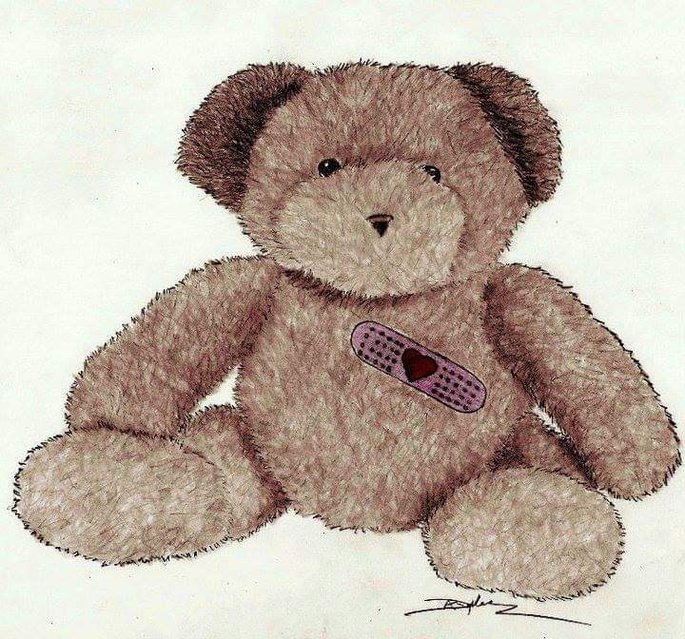 This bear featured a plush brown teddy bear, like the kind a small child would have, with a band-aid over its heart. Kathi was touched. The family was moved. Kathi had support and it helped her knowing that.
While Kathi loved nature, gardened, very hands on and do it yourself, type of person, she did have a bad habit: smoking. Her oncologist insisted she quit smoking. Kathi made several attempts. She would go days and sometimes weeks, before the cigarettes tightened their grip on her. She eventually gave up and just continued to smoke, although she did cut down.
Chemotherapy had started. The long-distance marriage wasn’t working out as planned. It was strained at best and was leading toward divorce. That was Kathi’s goal; beat the cancer, get a divorce, and visit her sister in California. Sadly, Kathi had to stay married to Jonathan while she was sick, because she needed the healthcare coverage. Yet, the closest doctor that accepted her insurance was an hour away.
As Kathi was unable to drive, friends and family stepped in either watch her daughters or drive her to treatments and appointments. Church members and a local division of the Girl Scouts dropped off food. The Girl Scout troop actually was dropping off food every week, on the same day. Kathi and her mother appreciated it. Sometimes, with the treatment schedule, it was hard to cook or get time to shop. Having homemade meals that could just be reheated was a huge help to the family.
By December 2011, Kathi was excited as an MRI showed necrosis (death) in the core of the largest tumor. It renewed her hope that she was getting better and she would fight this. She was losing her hair by this point, and was in a wig by January. The victory would be short-lived.
In February 2012, Kathi began losing feeling in her right hand. Just another development is was Kathi thought. Turns out Kathi had lesions on her brain. There was a treatment available. A one-shot treatment that would require her to go to the hospital every day for a week. More volunteers helped make that possible. Kathi’s oldest daughter, took on the role of surrogate parent to her younger siblings. She was old enough to watch them, cook for them and take care of them, if need be.
Kathi was hospitalized in February and came home in March. Even though chemotherapy and radiation were progressing, Kathi’s mother wanted her to think ahead, just in case the doctors were right about the timeline for her life. Legal papers needed to be filed. Her oldest daughter was Jonathan’s step-child and he would be legally able to take her if Kathi didn’t appoint a guardian for her. Kathi appointed my mother as guardian of all her children. Jonathan was an absentee parent, so Kathi’s mother could fight for custody, should the worst happen.
Anne and her mother spoke often. They were facing reality, while praying for a miracle. Anne was advised to come home, especially after the treatment for the brain lesions. Kathi’s maternal aunt was a registered nurse, who lived just a few doors down from Kathi. She was able to help the family with the medical terminology and tell the family what certain tests and treatment really meant in the way of progress of the cancer.
In March 2012, Anne, her husband, and daughter flew to New York. Kathi and Anne had not seen each other in 14 years. Her husband and daughter had never met her side of the family. Anne resumed her role as the oldest child. While visiting with her sister, when Kathi felt good enough to stay up and visit, Anne resumed cleaning and cooking. Anne was the cook of the family, knew how to prepare food from scratch versus using prepared food. Kathi used to cook like that, but with being sick, their mother reverted back to premade food. The week went quickly and Anne and her family had to return to California. Anne and Kathi gave each other a long hug. It meant a lot, that hug, as they just didn’t do that. They rarely showed physical affection for each other. Neither would say goodbye because Kathi knew that would be admitting the cancer was winning.
The end of April proved to be another indication this fight was taking its toll. Kathi stood up one day, and her legs gave out. She could not stand, walk or support herself. A trip to the local emergency room proved frustrating. The staff didn’t believe her as they couldn’t immediately find anything wrong. They wanted to discharge her as they didn’t believe there was any treatment to be given. After Kathi’s family reiterated she had cancer and something is wrong, they reluctantly ordered some more scans and found a mass on her spine. She was admitted and later transferred to the hospital, an hour away from her home, where her oncologist treated her.
A lumbar puncture was done. Hematology came back and said Kathi didn’t have transverse myelitis, which was suspected. Transverse myelitis was a rare, inflammatory disease of the spinal cord. Kathi was referred back to neurology. Neurology said since it wasn’t transverse myelitis, that they weren’t able to help and referred her back to oncology. This proverbial passing the buck took place a few times and she eventually ended up with oncology. Sadly, neither department wanted to take credit for Kathi, yet now she’s been diagnosed with paralysis from the waist down and was still in the hospital.
The cancer was robbing this once feisty, independent woman of her ability to care for herself, much less her children. Kathi’s middle daughter was beginning to develop behavioral issues. She was five years old, knew her mom was sick, but didn’t fully understand. The younger girls were being passed around as the need to tend to Kathi increased.
The problem now became what to do with Kathi. She had no use of her legs and couldn’t care for herself. While her home did have a ramp to get into the house, it wasn’t wheelchair ready. Surgery couldn’t be done on the lump on her spine. She stayed in the hospital for the time being. Kathi’s mother and younger sister drove the girls to see their mom as often as possible.
Kathi was using Facebook to keep in touch with friends, track her battle and continuing her military support and keeping in touch with her sister Anne. Mid-April, Kathi posted that she and her family were being bombarded with the, “how can we help” question from friends. She reluctantly, posted a list of items the family used. It gave those who wanted to help and opportunity to do so. Kathi’s pride had prevented her from asking for help. She grew up fiercely independent and the cancer wouldn’t allow her to maintain that status.
On May 6, 2012, Kathi’s oldest daughter and her prom date, dressed up in their prom clothing and headed off to the hospital to show Kathi. Kathi was able to see her daughter, in a beautiful prom dress and her friend in a tux. She never knew they didn’t go to the prom. Her daughter just wasn’t up for it. Kathi posted pictures on Facebook of her daughter. She frequently made posts about her status, received support from online friends and it helped her not feel so isolated while stuck in the hospital.
Within a week after seeing her daughter all dressed up, a frank conversation took place. The doctor said she wasn’t going to be able to stay in the hospital just because she was paralyzed. Options were discussed as to what options would be in her best interest. The only options were to return home on Hospice or to try to find a nursing home and go there on Hospice. Kathi wasn’t getting better. There were no further treatments to be done. This is when Kathi was forced to accept reality. Her mother stated that this was when Kathi lost hope and gave in to cancer. She now was face to face with her own mortality. Kathi had reached the final stage of dying: acceptance.
Kathi and Anne each had a military Facebook page. That was their family bond and had several mutual friends in common. Kathi asked Anne to keep her page updated when she couldn’t. Anne agreed. Starting mid-May, Anne updated Kathi’s page as she was no longer able to.
Kathi would not be returning home. Her mother had several animals, Kathi’s kids to take care of and they couldn’t afford a full-time nurse. Luckily, they found a nursing home that would take her and it was only three miles from her home. This meant her daughters could see her every day. On May 24, 2012, Kathi was transferred to the nursing home in the town she grew up in. Her mother reported she was very confused and disoriented. She was hoping the medication and the move were the reason.
Kathi was able to visit with her daughters often. Some days it was only for 15 minutes, other days it was an hour. She was beginning to refuse food. Sometimes it was days before she’d want to eat. The nurse informed family that it was a natural progression and indication of declining health. Anne reported this on Kathi’s Facebook page. One of Kathi’s friends wanted to know why they just didn’t sedate her and give her a feeding tube. Anne had to explain would be a life-sustaining treatment. She couldn’t receive artificial nutrition or hydration while on Hospice.
Anne continued to update Kathi’s page. The news was bleak. She had nothing good to report other than the girls and Kathi’s family were able to be with her more now that she was placed locally. On June 11, 2012, Anne had to report that Kathi was unresponsive and her pupils were dilated. The family was told to “expect the call” at any time. June 12, 2012 is when Anne made the final status update tracking Kathi’s battle with breast cancer. Anne reported her youngest sister had called her about 15 minutes prior to the post. Kathi had lost her battle with breast cancer. Kathi died within nine months of her initial diagnosis. She fought with everything she had. Kathi’s cancer was extremely aggressive and behaved in manners which no one, including herself, her family,d or the medical field expected. In the end, Kathi opted for passive euthanasia. She wanted to die naturally, without medical intervention.
On June 17, 2012, Kathi’s friends and family were in mourning as they said their farewells at a small ceremony at a local funeral pallor. Kathi had conveyed her wish to be cremated and that wish was honored. While it was only nine months from diagnosis to death, the cancer stripped her of who she was and left a medicated shell in its stead. They chose to remember her the way Dillion Thomas did, “Do not go gentle into that good night…Rage, rage against the dying of the light”. She did too. She fought breast cancer with all her might.
I chose to interview my mother, so to speak. I was originally going to use my sister’s conversations, emails and Facebook status, yet I knew that wouldn’t work, especially toward the end. What I meant regarding my mother’s interview is that I did use her conversations and emails as she died June 25, 2013, suddenly. I barely was able to write this paper. My grief is still such a powerful emotion that caused uncontrollable crying, while I completed the “interview” portion. I did learn that I am not as far in the grieving process as I thought. I convinced myself I was closer to acceptance when I’m still very angry. Couple that with survivor’s guilt that my younger sister died before me, which I don’t find natural, and I’ve got a much longer road to acceptance than I originally thought. While death is the inevitable conclusion of life, some deaths affect you differently. You never quite grasp how deeply affected you will be until it happens.

 The Pink Herald